Katori Titanium Cutting Board Review: Features, Pros and Cons
Choosing the right cutting board can make everyday food preparation more convenient. From chopping vegetables to preparing meat and fruit, a good cutting surface should be practical, easy to maintain, and suitable for your kitchen routine.
The Katori Titanium Cutting Board is marketed as an alternative to conventional plastic and wooden cutting boards. But is a titanium cutting board worth considering? In this review, we explore its advertised features, potential advantages, limitations, and what to check before ordering.
What Is the Katori Titanium Cutting Board?
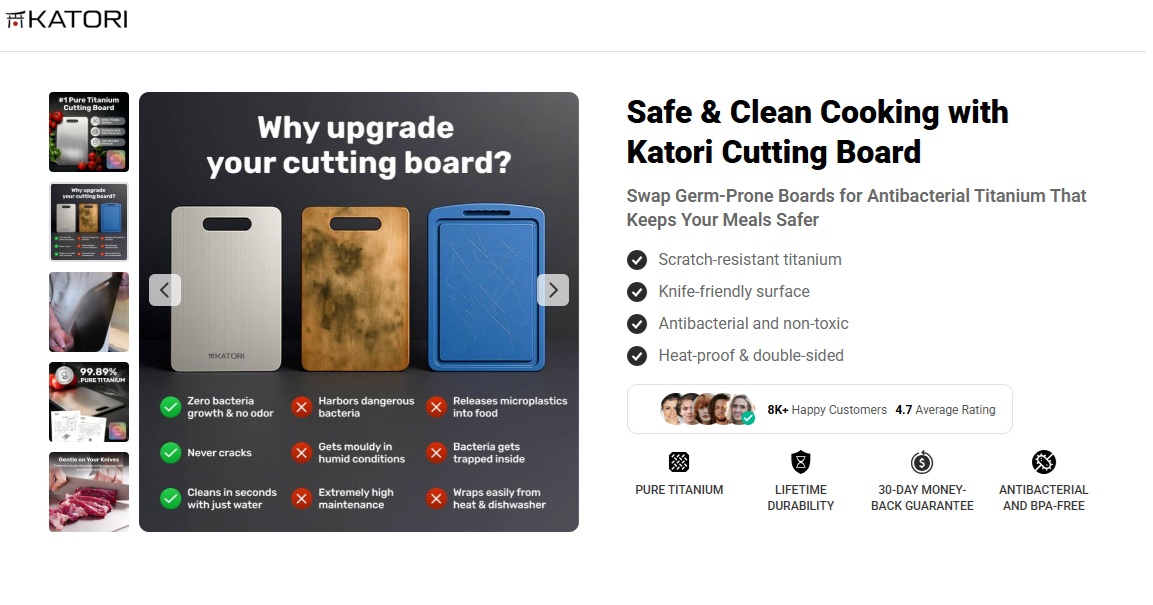
The Katori Titanium Cutting Board is a kitchen food-preparation surface marketed as a durable, nonporous alternative to traditional cutting boards.
The seller promotes its titanium construction, double-sided design, and easy-cleaning qualities. These features may appeal to home cooks who want to explore different materials for their kitchen.
Before purchasing, verify the exact material composition on the product page. Some products described as titanium boards may use a titanium surface or coating rather than being made entirely from solid titanium.
Key Features of the Katori Cutting Board
1. Titanium Construction
Titanium is known for its corrosion resistance and is used in a range of industrial, medical, and consumer applications. A cutting board made from this material may appeal to shoppers seeking an alternative to conventional board materials.
However, the exact composition and surface finish matter. Review the product specifications to understand what you are buying.
2. Double-Sided Design
The Katori board is advertised with a double-sided design. Having two usable surfaces may provide flexibility when preparing different ingredients.
For food safety, using separate boards for raw meat and ready-to-eat foods—or thoroughly cleaning the board between tasks—is still important. A double-sided design alone does not prevent cross-contamination.
3. Easy-Cleaning Surface
The seller promotes the board as easy to clean and resistant to absorbing odors. The actual cleaning experience depends on the material, finish, and care instructions.
Always follow the manufacturer’s guidance for washing, sanitizing, and maintaining the board.
4. An Alternative to Plastic and Wood
If you are comparing cutting board materials, titanium offers another option to consider alongside wood, bamboo, plastic, and composite surfaces.
Each material has trade-offs involving maintenance, durability, knife wear, weight, and price. The best choice depends on your cooking habits and priorities.
Pros and Cons of the Katori Titanium Cutting Board
Potential advantages
- A different material option for everyday food preparation.
- Advertised double-sided functionality.
- A surface marketed for easy cleaning.
- An alternative to traditional wood and plastic boards.
Potential disadvantages
- The exact material composition should be verified.
- A hard cutting surface may feel different from wood or plastic and could affect knife edges.
- The board’s weight, dimensions, and handling comfort should be checked before buying.
- Claims such as “antibacterial” or “lifetime durability” should not be interpreted as guarantees without supporting evidence.
- The product’s value depends on its actual price, construction, and return terms.
Is Titanium Better Than Wood or Plastic?
Not necessarily. Each cutting board material has advantages and limitations.
Wood boards can be gentle on knives but may require specific cleaning and drying practices. Plastic boards are widely available and can be convenient for food preparation, although they can develop grooves with use. A titanium board may appeal to shoppers interested in a different surface, but its hardness and feel may not suit every knife or cooking style.
Rather than assuming one material is universally best, compare maintenance requirements, knife compatibility, and manufacturer guidance.
What to Check Before Buying Katori
Before ordering the Katori Titanium Cutting Board, review these details:
- Material: Confirm whether the board is solid titanium, titanium-coated, or made from another material.
- Dimensions: Check its size and thickness against your available counter space.
- Knife compatibility: Review any guidance about knife wear and recommended cutting tools.
- Cleaning instructions: Confirm whether it is dishwasher-safe and how it should be maintained.
- Price: Check the total cost, including shipping, taxes, and any bundle offers.
- Refund policy: Read the seller’s return conditions and eligibility requirements.
Be cautious about absolute claims such as “100% antibacterial” or “indestructible.” A material’s properties alone do not establish that a finished cutting board eliminates foodborne pathogens or will never show wear.
Is the Katori Titanium Cutting Board Worth It?
The Katori Titanium Cutting Board may be worth investigating if you want to compare an alternative cutting surface with conventional kitchen boards.
Its value depends on the verified material, quality of construction, dimensions, knife compatibility, price, and care requirements. If you are happy with your existing cutting boards, there may be no need to replace them simply because a product is marketed as a newer alternative.
Where Can You Find the Katori Titanium Cutting Board?
You can review the current product offer and available purchasing details here:
Check the Katori Titanium Cutting Board Offer
Confirm the specifications, final checkout price, shipping details, and return policy before placing your order.
Final Verdict
The Katori Titanium Cutting Board offers a different approach to food preparation, with advertised titanium construction and a double-sided design. It may interest shoppers looking for an alternative to wood or plastic, but material claims, knife compatibility, and long-term durability should be evaluated carefully.
Compare the product with other cutting boards and choose based on your cooking needs, budget, and the specifications you can verify.
Disclaimer: This article is for informational purposes. Product features and performance depend on the actual materials and construction. Follow safe food-handling practices and the manufacturer’s care instructions.
Affiliate disclosure: This article contains an affiliate link. We may earn a commission if you purchase through it, at no additional cost to you.