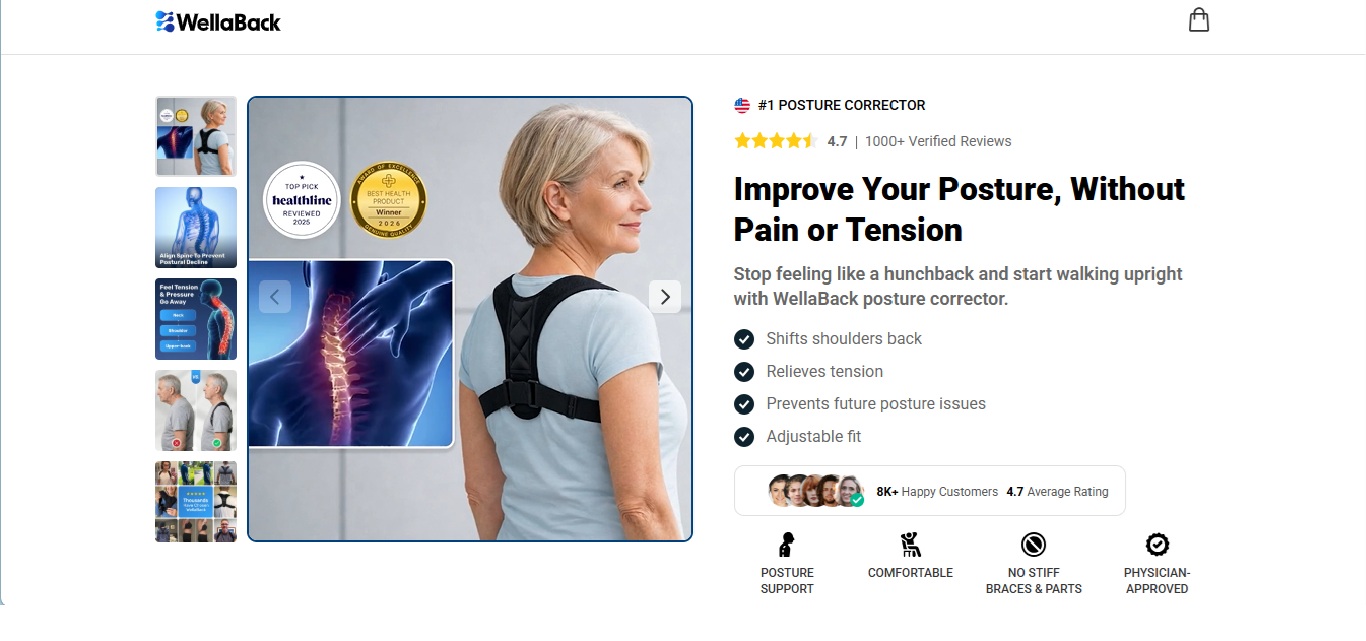
WellaBack Posture Corrector Review w: Features, Benefits, and What to Know Before Buying
Spending hours at a desk, looking down at a phone, or working on a computer can make it easy to fall into a slouched position. If you are looking for a simple way to become more aware of your posture, a wearable posture corrector may be worth exploring.
In this review, we look at posture correctors, their potential benefits, important limitations, and what to check before purchasing the product advertised through our offer link.
What Is a Posture Corrector?
A posture corrector is a wearable support designed to encourage a more upright upper-body position. Depending on the design, it may use adjustable straps or supportive fabric around the shoulders and back to provide a gentle reminder when you begin to slouch.
The product linked in this article appears to be a posture-correcting device offered through an online checkout page. The specific brand name, materials, sizing, and included features could not be independently confirmed, so review the seller’s current product information before ordering.
What Are the Potential Benefits?
Greater Awareness of Posture
One potential benefit of a posture corrector is that it can remind you to notice how you position your shoulders and upper back during everyday activities.
Support During Desk Work
People who spend long periods sitting may find a wearable reminder useful when combined with regular movement breaks and a comfortable workstation setup.
A Simple Addition to a Posture Routine
Some users may find a posture corrector convenient as one part of a broader routine that includes stretching, strengthening exercises, and improved work habits. However, a brace does not strengthen muscles simply by being worn.
Do Posture Correctors Really Work?
The scientific evidence is mixed. Some research suggests that certain devices may help improve posture while worn or when used alongside an exercise program, but long-term benefits are not firmly established.
Medical guidance from Cleveland Clinic emphasizes regular movement, ergonomic adjustments, and exercises that support the muscles involved in posture. A wearable device should not be viewed as a guaranteed way to permanently straighten the spine or eliminate back pain.
What Should You Check Before Buying?
Before purchasing this posture corrector, review the following details:
- Sizing: Confirm that the available sizes fit your measurements.
- Adjustability: Check whether the straps or support can be adjusted comfortably.
- Materials: Look for details about fabric, breathability, and cleaning instructions.
- Return policy: Read the seller’s refund and return terms.
- Total cost: Check shipping charges, taxes, and any recurring or additional fees.
- Product claims: Be cautious of promises to cure pain, permanently correct posture, or produce guaranteed results.
Because the linked page is a tracked checkout URL, verify the product name and specifications on the actual sales page.
Is a Posture Corrector Worth Considering?
A posture corrector may be worth considering if you want a wearable reminder to pay attention to your upper-body position. It is not necessary for everyone, and it should not be worn so tightly that it causes discomfort, numbness, or restricted movement.
For lasting improvements, consider combining posture awareness with regular activity, appropriate exercises, and a well-adjusted workstation. If you have persistent neck or back pain, consult a qualified healthcare professional to determine the cause and appropriate care.
Where Can You Find the Product?
You can review the current offer and check the product details here:
View the Posture Corrector Offer
Confirm the exact product, sizing options, price, shipping information, and return policy before placing an order.
Final Verdict
A posture corrector can provide a useful reminder to pay attention to how you sit and stand, but results vary and long-term effectiveness remains uncertain. The best approach is to choose a comfortable product, keep expectations realistic, and use it alongside healthy movement habits rather than relying on it as a stand-alone solution.
Disclaimer: This article is for informational purposes only and is not medical advice. A posture corrector is not a substitute for professional evaluation or treatment.
Affiliate disclosure: This article contains an affiliate link. We may earn a commission if you purchase through it, at no additional cost to you.